Skip to content
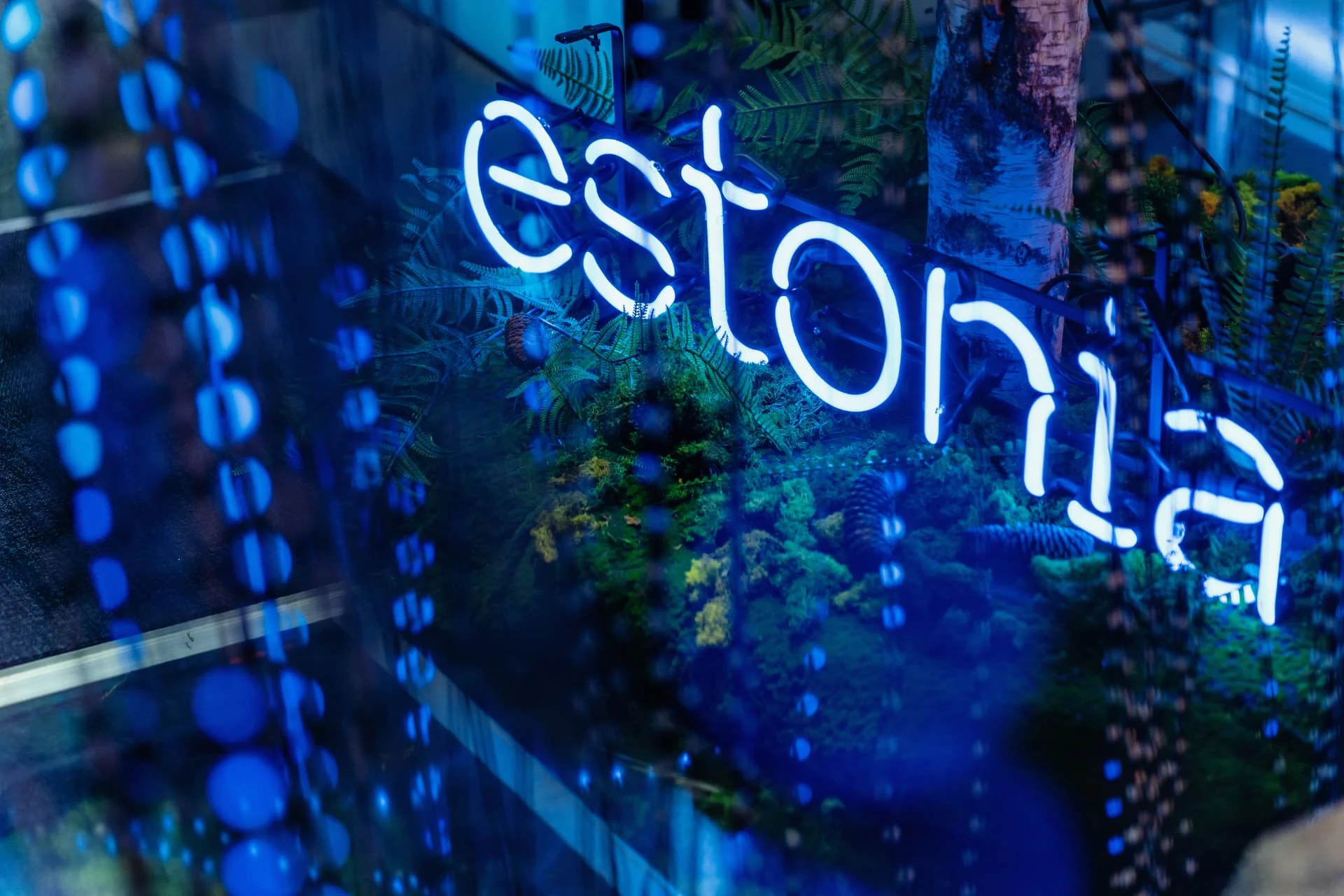
Illuminated Estonia sign among greenery

COP31 Estonian Programme

Discover the smart and scalable ideas and solutions at the Estonian Pavilion.

Blue Zone · Estonian Pavilion C410

Topics

52 sessions

All times Antalya local (UTC+03:00) · Programme subject to change

Monday, 9 November

Food, Agriculture and Health

–

Round Table, Fishbowl Chat and Workshop

Scaling Sustainable Agriculture: Smart Farming, Regenerative Practices & Nature-Based Economies

Food systems sit at the centre of the climate, biodiversity and water crises. They are also one of the places where solutions are most within reach. This session brings together scientists, practitioners and young voices to ask how smart farming tools, regenerative practices and nature-based economies can move from successful pilots to large-scale adoption. It looks at what farmers need in order to adopt them, what investors need in order to fund them, and how research and policy can close the gap between the two. The panel is followed by a 15-minute hands-on workshop, “Get Your Hands Dirty”, where participants work in small groups to turn what they heard into practical next steps.

Moderator

  • Dr. Abdelaziz Hajjaji, Programme Manager, Islamic Organization for Food Security (IOFS) (Kazakhstan)

Speakers

  • Dr. Adel Smeda, Science and Environment Sector, ICESCO (Morocco)
  • Joselyn Ezekiel Mirashi, CEO, Digi Farm Tanzania (Tanzania)
  • Kiara Sweeney, Program Director, Yunus Environment Hub (Germany)
  • Pablo Soares, Executive Director, Hidrocontrol (Brazil)
  • Khurram Lalani, Principal & Climate Finance Expert, Resources Future (Pakistan)

+2 more

View Details

–

Panel Discussion

The Resources Are Already Here

Climate change, biodiversity loss, strained ecosystems, rising food demand and fierce competition for the materials needed for industry and the clean transition are often tackled separately. Yet they share a common root: how societies produce, consume and manage resources. This opening session of the Estonian pavilion shows why the circular economy is the thread connecting these challenges together, and why many of the answers are already within reach, in the materials, nutrients and energy that flow through our societies every day.

Moderator

  • Pär Larshans, Member of the UNEP Global Partnership on Nutrient Management Steering Committee, Chief Sustainability Officer, Ragn-Sells Group (Sweden)

Speakers

  • Johan Falk, Exponential Roadmap Initiative (Sweden)
  • Annika Christell, Swedish mitigation negotiator and EU mitigation coordinator & co-chair, Naturvårdsverket/UNFCCC (Sweden)
  • Prof. Kalle Olli, Maaülikool/Estonian University of Life Sciences (Estonia)
  • Adrian Leip, European Commission (Belgium)
Circular Economy & ResourcesFood Systems & Agriculture
View Details

–

Panel Discussion

Down the Drain? Turning Wastewater into a Climate Win

Wastewater treatment and aquaculture are often seen as part of the emissions problem. This session challenges that view. Through concrete examples and policy perspectives, speakers will show how resource recovery can cut methane and nitrous oxide emissions at the source, while strengthening food security, energy resilience and circularity. The result is cleaner water, a cooler climate and greater value from every drop.

Moderator

  • Pär Larshans, Member of the UNEP Global Partnership on Nutrient Management Steering Committee, Chief Sustainability Officer, Ragn-Sells Group (Sweden)

Speakers

  • Hans Kleivdal, NORCE (Norway)
  • Martina Otto, Climate and Clean Air Coalition, UNEP (France)
  • William Babis, Stockholm Environment Institute (Sweden)
  • Jonas Hagman, CEO, EasyMining (Sweden)
  • Adrian Leip, European Commission (Belgium)
Carbon & Critical MaterialsCircular Economy & ResourcesClean Energy & EfficiencyDigital & Green TechFood Systems & Agriculture
View Details

–

Panel Discussion

Ukraine’s Agricultural Recovery: Building Climate Resilience and a Shared European Future

Ukraine's agricultural sector has demonstrated remarkable resilience and innovation during wartime, offering valuable lessons for Europe on food security, technological adaptation and maintaining production under extreme conditions. As Ukraine advances towards EU membership, agricultural recovery, climate resilience and European integration present opportunities for mutual learning, investment and closer cooperation. Bringing together senior representatives of Estonia and Ukraine, alongside international development partners, this session will explore how climate-smart agriculture, innovation, knowledge exchange and international support can contribute to a more resilient and competitive agricultural sector. Looking ahead to the Ukraine Recovery Conference 2027 (URC2027), co-hosted by Ukraine and Estonia in Tallinn in January, the discussion will identify priority needs and practical opportunities for Estonian-Ukrainian cooperation and international partnerships.

Moderator

  • Kadri Tillemann, Project Manager, URC2027 Local and Regional Dimension, Estonian Ministry of Regional Affairs and Agriculture (Estonia)

Speakers

  • Madis Pärtel, Deputy Secretary General for Bioeconomy, Estonian Ministry of Regional Affairs and Agriculture (Estonia)
  • Vitalii Holovnia, Deputy Minister, Ministry of Agrarian Policy and Food of Ukraine (Ukraine)
  • Pieternel Boogaard, Managing Director, Office of Technical Delivery, IFAD (Italy)

Private-Sector Contributors

  • Kristjan Luha, Co-founder and Head of Value Chain Partnerships, eAgronom (Estonia)
  • Karl Koort, Member of the Board and Development Manager, Bioforce (Estonia)
View Details

–

Youth Voices

No FOMO! by Climate Youth Delegates

A 5 p.m. "Tea-brief" of what has been going on in other pavilions and sessions that you might have missed. Every afternoon aka at tea time, the Estonian and Latvian youth delegates Marie and Rūdolfs, together with guests, debrief and offer their perspective on what has been spotted by them at COP31.

Keynote speakers

  • Marie Johanna Univer, Youth Climate Delegate (Estonia)
  • Rūdolfs Podzis, Youth Climate Delegate (Latvia)
  • Alexander Feil, Climate Youth Delegate (Luxembourg)
  • Elena-Alexandra Miron, Climate Youth Delegate (Romania)
  • Saara Böök, Climate Youth Delegate (Finland)
  • Emaan Danish Khan, Founder, Earth Warriorz (Pakistan)
Youth & Education
View Details

Tuesday, 10 November

Energy and Transport

–

Panel Discussion

The Missing Trillion: Financing Energy Efficiency at Scale from Europe to Emerging Markets

Energy efficiency remains the world's largest untapped clean energy resource, yet investment levels remain far below what is needed to achieve climate and energy security objectives. The European Energy Efficiency Financing Coalition was created precisely to mobilize private capital, improve access to finance, de-risk projects, develop blended finance solutions, and build investment pipelines. COP Turkey provides an opportunity to move the discussion beyond policy commitments and toward a practical question: How do we mobilize trillions of dollars for efficiency investments that are already technically viable but remain financially underserved?

Moderator

  • Ardo Reinsalu, Futurist, AI enthusiast and Author of Rohetiiger’s “Balanced Economy 2040” vision, Director of Vehicles at Bolt (Estonia)

Speakers

  • Dr. Basma Majerbi, Associate Professor of Finance, Gustavson School of Business, University of Victoria; Founder and Director, Impact Investing Hub; Lead Investigator for Business and Finance Innovation, ACET (Canada)
  • Stéphanie Nour, International Director, Econoler (Canada/Europe)
  • Sulev Alajõe, EEEFC National Hub project manager, Environmental Investment Centre (KIK); Former Director, Estonian Islands Energy Agency (Estonia)
Circular Economy & ResourcesClean Energy & EfficiencyClimate Finance & InvestmentDigital & Green Tech
View Details

–

Panel Discussion

Powering the Digital Future: Building Climate-Smart Data Centers

Our digital future needs clean power – and climate-smart infrastructure. Estonia's message is that digital development and climate action do not have to be competing objectives. With the right conditions, data centres can become part of a smarter energy system – where growing electricity demand goes hand in hand with renewable energy, flexibility, innovation and resource efficiency.

Opening Remarks

  • H.E. Mrs. Katrin Saarsalu-Layachi, Special Envoy for Climate and Energy Policy, Estonian Ministry of Foreign Affairs (Estonia)

Moderator

  • Ardo Reinsalu, Futurist, AI Enthusiast and Author of Rohetiiger’s “Balanced Economy 2040” Vision, Director of Vehicles at Bolt (Estonia)

Speakers

  • Laura Remmelgas, Head of Department, Climate and Sustainable Economy Department, Estonian Ministry of Climate (Estonia)
  • Katre Savi, Head of ESG and Quality, Sunly (Estonia)
  • Claude Finckenberg, Founder, Partner and Member of the Board, FCDC (Finland)
Circular Economy & ResourcesClean Energy & EfficiencyDigital & Green Tech
View Details

–

Panel Discussion

How Tallinn Reinvented District Heating: From Fossil Dependency to a Resilient Renewable Energy System

Less than two decades ago, Tallinn’s district heating system was almost entirely dependent on imported natural gas. Today, 90% of the city's district heating is already produced from renewable and recovered energy sources. By replacing imported fossil fuels with local energy sources, Tallinn has made decarbonisation and energy security part of the same strategy. This case study explores how Tallinn has transformed its existing district heating infrastructure into a modern and flexible urban energy system, integrating innovative solutions such as large-scale heat pumps, thermal storage and sector coupling. The result is a cleaner and more resilient system, less exposed to imported fuel dependency and price volatility, while ensuring reliable and affordable heat for the city. Tallinn’s experience demonstrates how cities can move towards fully fossil-free heating while strengthening their energy independence.

Moderator

  • Robert Kitt, CEO, Utilitas Tallinna Soojus (Estonia)

Speakers

  • Priit Koit, CEO, Utilitas Group (Estonia)
  • Andrea Voigt, Vice President, Global Public & Industry Affairs, Danfoss Climate Solutions (Belgium)
  • Merja Paavola, Vice President, Corporate Public Affairs, Fortum Corporation (Finland)
Carbon & Critical MaterialsClean Energy & Efficiency
View Details

–

Fireside Chat

Ukraine Keeps the Lights On. Could Europe?

Ukraine’s energy system has been under immense pressure from sustained attacks by Russia. While this continues to create a lot of problems for the country, they have also found ways to keep their power system running. This has produced operational know-how no other European system has: rapid repair, physical and cyber protection, and the use of distributed generation and storage as a resilience tool. The discussion will seek to understand how to keep the energy network running while it is under attack, what is the role of decentralised energy production and storage in supporting resilience and how to drive future investments in the right direction. These are important lessons for other European countries to learn from, as the threat of hybrid attacks continues to grow. This conversation exchanges practical lessons and asks how reconstruction can build a cleaner and more resilient system, with a view to URC2027 in Estonia.

Moderator

  • Katrin Saarsalu-Layachi, Special Diplomatic Envoy for Climate and Energy Policy (Estonia)

Speakers

  • Olena Pavlenko, PhD, President and Co-founder, DiXi Group (Ukraine)
  • Priit Koit, CEO, Utilitas Group (Estonia)
  • Eero Ailio, Adviser on Energy Transition and Local Governance, Directorate-General for Energy (DG ENER), European Commission (Belgium)(TBC)
View Details

–

Youth Voices

No FOMO! by Climate Youth Delegates

A 5 p.m. "Tea-brief" of what has been going on in other pavilions and sessions that you might have missed. Every afternoon aka at tea time, the Estonian and Latvian youth delegates Marie and Rūdolfs, together with guests, debrief and offer their perspective on what has been spotted by them at COP31.

Keynote speakers

  • Marie Johanna Univer, Youth Climate Delegate (Estonia)
  • Rūdolfs Podzis, Youth Climate Delegate (Latvia)
  • Alexander Feil, Climate Youth Delegate (Luxembourg)
  • Elena-Alexandra Miron, Climate Youth Delegate (Romania)
  • Saara Böök, Climate Youth Delegate (Finland)
  • Emaan Danish Khan, Founder, Earth Warriorz (Pakistan)
Youth & Education
View Details

–

Reception

Estonian Pavilion Opening Reception. Powered by Utilitas

Let's kick off COP31 with an energetic opening reception at the Estonian Pavilion! Join us for a warm welcome, inspiring conversations, and a chance to connect with changemakers, innovators, and climate leaders from around the world. We'll also get an insider's perspective on the opening of COP31 negotiations – the key issues on the table, where things stand, and what to watch as the summit unfolds. Enjoy delicious bites, great company, and relaxed networking as we kick off two weeks of climate action, innovation, and international collaboration. Let's start COP31 together!

Moderator

  • Anneli Ohvril, Estonian Pavilion Programme Lead (Estonia)

Welcome Remarks

  • H.E. Katrin Saarsalu-Layachi, Special Envoy for Climate and Energy Policy, Ministry of Foreign Affairs (Estonia)
  • Laura Remmelgas, Director of the Department of Climate and Environmentally Sustainable Economy, Ministry of Climate (Estonia)
  • Priit Koit, CEO, Utilitas Group (Estonia)

COP31 Negotiations Kick-off: Where We Stand

  • Katre Kets, Estonia's Chief Climate Negotiator, Head of International Climate Affairs and Clean Tech Diplomacy, Ministry of Climate (Estonia)
View Details

Wednesday, 11 November

Zero Waste

–

Panel Discussion

Resource Plants: Where Waste Becomes Wealth

Resource security does not start with a new mine. It starts with seeing what already flows through our cities and industries. This session introduces the Resource Plant: a waste treatment facility reimagined as a producer of critical raw materials, nutrients, clean water and energy, while safely removing substances that should not remain in circulation. Speakers will explore how turning waste into resources can strengthen resilience, competitiveness, and resource security.

Moderators

  • Pär Larshans, Member of the UNEP Global Partnership on Nutrient Management Steering Committee, Chief Sustainability Officer, Ragn-Sells Group (Sweden)
  • Alar Saluste, OSA Project and Ash2Salt, Ragn-Sells (Estonia)

Speakers

  • Karin Forsberg, Vice President, Energy Division, Head of Strategic Partnerships, Alfa Laval (Sweden)
  • Anna Ryott, Ernst and Young (Norway)
  • Cosmin Dragan, BNP Paribas (France)
Carbon & Critical MaterialsCircular Economy & ResourcesClean Energy & EfficiencyDigital & Green Tech
View Details

–

Panel Discussion

Smart circular solutions driving the transition towards climate neutrality

The event will discuss the role of different circular solutions to make the necessary change of reducing the impact to the climate, environment and human health. The market for secondary raw materials is still not functioning well and necessary policy initiatives are needed. If successful, theses solutions can have a significant impact on reducing GHG emissions.

Moderator

  • Jolanda Lipu, Senior Sustainability Advisor, Miltton New Nordics (Estonia)

Speakers

  • Hannah Ward, Institutional Partnerships Lead, Ellen MacArthur Foundation (United Kingdom)
  • Kärt Mae, Rail Baltic (Estonia)
  • Alar Saluste, OSA Project and Ash2Salt, Ragn-Sells (Estonia)
Carbon & Critical MaterialsCircular Economy & Resources
View Details

–

High-Level Dialogue

Estonia–Oman High-Level Dialogue: Building National Climate-Delivery Capability

This high-level Estonia–Oman panel will explore how trusted environmental information and digital public infrastructure can help turn climate and environmental priorities into real-world delivery. Estonia and Oman will bring two national perspectives: Estonia’s experience with secure, interoperable information exchange and Oman’s work to strengthen environmental data capability under Vision 2040. The discussion will focus on how data, institutions and implementation can be connected into effective national climate-delivery capability. The format will include a 30-minute moderated discussion followed by 10–15 minutes of audience Q&A.

Moderator

  • Mark Skljarov, Co-founder and CEO, WasteLocker; PhD Researcher in Environmental Engineering; EU Climate Pact Ambassador (Estonia)

Speakers

  • H.E. Katrin Saarsalu-Layachi, Special Envoy for Climate and Energy Policy, Ministry of Foreign Affairs (Estonia)
  • H.E. Dr. Abdullah Ali Al-Amri, President of the Environment Authority of Oman; President of the 7th United Nations Environment Assembly (UNEA-7) (Oman)
Digital & Green TechGovernance & Policy
View Details

–

Keynote/Spotlight

Closing the Loop: A Real-Life Case of Wind Turbine Decommissioning

The clean energy transition is about more than building new renewable capacity – it is also about taking responsibility for what happens at the end of an asset’s life. As the global wind fleet grows and matures, responsible decommissioning, material recovery and land restoration are becoming an increasingly important part of the sustainability conversation. Using the decommissioning of a turbine at Latvia’s Grobiņa Wind Park as a real-life case, this session will follow what happens to a wind turbine after its operational life ends – from dismantling and recycling to finding new uses for blade materials and restoring the land. The case demonstrates how circularity can be built into the full lifecycle of renewable energy infrastructure and, just as importantly, how making this process visible can strengthen public confidence in the energy transition.

Moderator

  • Jolanda Lipu, Senior Sustainability Advisor, Miltton New Nordics (Estonia)

Keynote speaker

  • Rene Tammist, Utilitas Wind CEO (Estonia)

Speakers

  • Tinne Van der Straeten, CEO, WindEurope; Former Minister of Energy of Belgium (Belgium)
  • Rene Tammist, Utilitas Wind CEO (Estonia)
Carbon & Critical MaterialsCircular Economy & ResourcesClean Energy & EfficiencyDigital & Green Tech
View Details

–

Youth Voices

No FOMO! by Climate Youth Delegates

A 5 p.m. "Tea-brief" of what has been going on in other pavilions and sessions that you might have missed. Every afternoon aka at tea time, the Estonian and Latvian youth delegates Marie and Rūdolfs, together with guests, debrief and offer their perspective on what has been spotted by them at COP31.

Keynote speakers

  • Marie Johanna Univer, Youth Climate Delegate (Estonia)
  • Rūdolfs Podzis, Youth Climate Delegate (Latvia)
  • Alexander Feil, Climate Youth Delegate (Luxembourg)
  • Elena-Alexandra Miron, Climate Youth Delegate (Romania)
  • Saara Böök, Climate Youth Delegate (Finland)
  • Emaan Danish Khan, Founder, Earth Warriorz (Pakistan)
Youth & Education
View Details

Thursday, 12 November

Resilient Cities and Built Environment

–

Keynote/Spotlight

From Shower Water to Food: Estonia´s Circular Aquaponics Testbed

How can water used in our homes or offices become a resource for growing fish and plants? Mait Kriipsalu and Merrit Shanskiy present lessons from two indoor aquaponics systems developed at the Estonian University of Life Sciences, both using reclaimed water. Combining fish farming with soil-free plant cultivation, these systems explore how nutrients from fish can support plant growth while water circulates through the system. The session considers their potential for local food production and more efficient resource use in a changing climate. It also looks beyond food: could homes, offices and community spaces host living labs that reconnect people with nature? Drawing on collaboration across the university’s disciplines, the speakers explore the knowledge and practical skills needed to balance fish, plants, water and energy—and make circular systems part of everyday life.

Keynote speakers

  • Prof. Mait Kriipsalu, Professor of Water Protection and Waste Management, Estonian University of Life Sciences (Estonia)
  • Prof. Merrit Shanskiy, Professor of Soil Science, Estonian University of Life Sciences (Estonia)
Circular Economy & ResourcesClean Energy & EfficiencyDigital & Green TechFood Systems & Agriculture
View Details

–

Panel Discussion

Made in Europe: Closing the Critical Materials Gap

Europe’s industries, from carmaking and defence to renewable energy and electronics, depend on critical raw materials, while its farms depend on nutrients such as phosphorus. Yet much of this supply relies on imports from a handful of suppliers, leaving Europe exposed to geopolitical shocks, price swings and supply disruptions. This session explores how circular solutions can turn recovered resources into a secure, homegrown supply, helping to close the gap between what Europe needs and what it produces.

Moderator

  • Kai Realo, CEO, Ragn-Sells Estonia (Estonia)

Speakers

  • Karin Forsberg, Alfa Laval (Norway)
  • Alar Saluste, OSA Project and Ash2Salt, Ragn-Sells (Estonia)
  • Mark Skljarov, CEO of Wastelocker (Estonia)

Video message

  • Christian Rasquin, Managing Director, INWESD; European Landfill Association (ELA) (Germany)
Carbon & Critical MaterialsCircular Economy & ResourcesClean Energy & EfficiencyCultural Heritage & ResilienceDigital & Green TechFood Systems & Agriculture
View Details

–

Panel Discussion

Beyond ROI: Financing the Full Value of Sustainable Infrastructure

What if the greatest returns on infrastructure investment never appear on the project's balance sheet? Sustainable transport infrastructure, such as modern railways, generates value far beyond ticket revenues and freight charges. Fewer accidents, lower emissions, safer journeys, more resilient supply chains and greater business competitiveness deliver substantial economic and societal benefits. Yet these returns are often dispersed across sectors, difficult to monetize and rarely captured by infrastructure investors themselves. High level expert panel explores how financial institutions can look beyond traditional ROI models to recognize the broader economic value, reduced risks and long-term resilience enabled by sustainable infrastructure. The central question: How can we translate wider societal and economic benefits into stronger investment cases for sustainable infrastructure?

Speakers

  • André Küüsvek, President and CEO, Nordic Investment Bank (Estonia/Finland)
  • Lucie Anderton, Head of Sustainability, International Union of Railways (UIC) (United Kingdom)
  • Matīss Paegle, Chairman of the Supervisory Board of RB Rail AS (Latvia)
Carbon & Critical MaterialsClimate Finance & InvestmentDigital & Green Tech
View Details

–

Keynote/QA

What Lies Beneath? How AI and 3D Technology Are Transforming Urban Greenery

How can cities turn complex sustainability challenges into smarter, greener urban environments? The FinEst Smart City Challenge connects real urban challenges with research-driven solutions, from energy efficiency and bathing water quality to building reuse, nature-based solutions and citizen well-being. This session highlights how digital innovation is transforming urban greenery planning. Discover Herbarium.ai, a digital platform that uses vegetation data and 3D models to help cities plan and manage green spaces, and TreeCity, which models underground tree roots to prevent construction damage and support healthier urban trees. Explore how smart technologies can help cities become greener, more resilient and more liveable.

Speakers

  • Külle Tärnov, Head of Innovation, FinEst Centre for Smart Cities, TalTech (Estonia)
  • Kristiina Kupper, Research Fellow, FinEst Centre for Smart Cities, TalTech (Estonia)
Clean Energy & EfficiencyDigital & Green Tech
View Details

–

Panel Discussion

What Can Historic Buildings Teach Us About a Climate-Resilient Future?

Historic buildings have survived centuries of changing climates, evolving societies and shifting needs. What can we learn from their design, materials, craftsmanship and adaptability as we face the challenges of climate change today? Preserving and adapting our historic buildings is not a question of whether, but how. Beyond their cultural and historical value, these buildings hold valuable lessons in resource efficiency, durability, passive climate adaptation and long-term resilience. This panel explores how traditional knowledge and modern innovation can work together to make historic buildings more energy-efficient and climate-resilient while preserving their unique character. Drawing on European and international research, policies and practical experience, the discussion will examine how heritage can contribute to climate mitigation and adaptation — and what it takes to turn these insights into practical solutions.

Moderator

  • Ave Paulus, Focal Point, ICOMOS Climate Action Working Group; President, ICOMOS Estonia (Estonia)

Speakers

  • Filippo Calcerano, National Research Council of Italy (Italy)
  • Riin Alatalu, Leader, ICOMOS EPBD Working Group; Estonian Academy of Arts (Estonia)
  • Charles Giry-Deloison, Foundation for Cultural Heritage Sciences; Professor of Modern History, University of Artois (France)
  • Lori Ferriss, Built Buildings Lab (USA)
  • Philipp Hesse, General Secretary, ICOMOS ISCES (Denmark/Germany)
Carbon & Critical MaterialsCircular Economy & ResourcesClean Energy & EfficiencyCultural Heritage & Resilience
View Details

–

Youth Voices

No FOMO! by Climate Youth Delegates

A 5 p.m. "Tea-brief" of what has been going on in other pavilions and sessions that you might have missed. Every afternoon aka at tea time, the Estonian and Latvian youth delegates Marie and Rūdolfs, together with guests, debrief and offer their perspective on what has been spotted by them at COP31.

Keynote speakers

  • Marie Johanna Univer, Youth Climate Delegate (Estonia)
  • Rūdolfs Podzis, Youth Climate Delegate (Latvia)
  • Alexander Feil, Climate Youth Delegate (Luxembourg)
  • Elena-Alexandra Miron, Climate Youth Delegate (Romania)
  • Saara Böök, Climate Youth Delegate (Finland)
  • Emaan Danish Khan, Founder, Earth Warriorz (Pakistan)
Youth & Education
View Details

Friday, 13 November

Finance and Trade

–

Keynote

Putting a Price on Health: The External Costs of Environmental Damage

Environmental damage, including climate change, affects health in ways that are often absent from market prices and investment decisions. Air pollution, heat stress, noise, extreme weather events and other environmental pressures generate real costs for individuals, healthcare systems, cities and economies — yet these external costs are rarely fully accounted for. This session explores how health-based valuation and willingness-to-pay can make these hidden costs visible and support better policy and investment choices. Drawing on results from the MARCHES project and beyond, it will present cost-benefit assessments of measures that reduce environmental pressures in Tallinn, including their net present value (NPV). The session will also examine public acceptance of these measures, connecting economic evidence with the social conditions needed for successful implementation.

Keynote speaker

  • Prof. Hans Orru, Head of Centre for Sustainable Development, University of Tartu. (Estonia)
View Details

–

Panel Discussion

Built to Last: Small-Scale Adaptation Finance Beyond the Project

Developing countries access adaptation finance through public and private sources, including multilateral climate funds, development finance institutions and bilateral programmes. While scaling up finance is essential, adaptation investments build resilience only if they continue delivering benefits beyond the financing period. This dialogue explores how different financing sources can work together to sustain and scale adaptation investments, focusing on local ownership, institutional capacity, long-term financing, private sector participation and alignment with national adaptation priorities. It will also examine how small bilateral projects can complement larger funding mechanisms by testing solutions, building capacity and preparing pipelines for larger-scale investment, while improving coordination across public and private finance.

Speakers

  • Mikko Ollikainen, Head of the Adaptation Fund Secretariat (Finland)
  • Katre Kets, Head of Delegation of Estonia to the UNFCCC (Estonia)
  • Nicole N. Kapesi, Deputy Executive Director of Nipe Fagio (Tanzania)
  • Justine Audrain, Global Lead of the LoCAL+ Facility at the United Nations Capital Development Fund (UNCDF) (Kenya)
Climate Finance & InvestmentGovernance & Policy
View Details

–

Keynote + Panel Discussion

How an Entire Economy Built a Shared Vision for 2040

How do you get businesses, government, experts and citizens with different interests to agree on a shared direction for the next 15 years? 300 organisations helped build five sector roadmaps that were then brought together into one vision for 2040. This session looks at how that process worked, where interests conflicted, and what other countries can learn from it.

Keynote speaker

  • Ardo Reinsalu, Author of the Balanced Economy 2040 Concept (Estonia)

Panelists

  • Helen Sulg, Head of Development & Partnerships, Environmental Investment Centre (KIK) (Estonia)
  • Maris Ojamuru, Founder and Partner, Sustinere (Estonia)
View Details

–

Keynote + QA / Panel Discussion

Where’s the Money? Financing Possibilities for Implementing Society-Wide Sustainability Initiatives

How to finance a systemic sustainability change? It is obvious that societies need to change and limit their environmental impact massively. It is also true that there is money for individual green projects and ventures. But financing the society-wide transformation is much harder: benefits are spread across many actors, timelines are long, and no single investor owns the outcome. Public budgets cannot carry it alone, and private capital rarely moves first. Following the session on the Estonian Model for an Economy in Balance, this event brings together Nordic and international perspectives from international public finance and impact investment. How does each look at systemic change? What does each need to see before backing a transition rather than a single project? Where do their roles meet, and where they diverge? Please join us in the discussion how systemic sustainability change can be financed.

Moderator

  • Kadri Vunder Fontana, Group Head of Sustainability (Estonia)

Speakers

  • Renat Heuberger, Co-founder, South Pole; CEO, Terra Impact Ventures (Switzerland)
  • André Küüsvek, President and CEO, Nordic Investment Bank (Estonia/Finland)
View Details

–

Youth Voices

No FOMO! by Climate Youth Delegates

A 5 p.m. "Tea-brief" of what has been going on in other pavilions and sessions that you might have missed. Every afternoon aka at tea time, the Estonian and Latvian youth delegates Marie and Rūdolfs, together with guests, debrief and offer their perspective on what has been spotted by them at COP31.

Keynote speakers

  • Marie Johanna Univer, Youth Climate Delegate (Estonia)
  • Rūdolfs Podzis, Youth Climate Delegate (Latvia)
  • Alexander Feil, Climate Youth Delegate (Luxembourg)
  • Elena-Alexandra Miron, Climate Youth Delegate (Romania)
  • Saara Böök, Climate Youth Delegate (Finland)
  • Emaan Danish Khan, Founder, Earth Warriorz (Pakistan)
Youth & Education
View Details

Saturday, 14 November

Children, Youth, Education and Skills

–

Panel Discussion

Living Soils, Resilient Food: Algae Biotechnology from Estonia to Climate-Vulnerable Farms

Healthy soil is the foundation of food security and one of the largest land-based carbon stores, yet it is degrading worldwide. In the EU alone, 60–70% of soils are in an unhealthy state, and the EU's first law on soil monitoring and resilience entered into force in December 2025. Climate-vulnerable regions face the same problem with fewer resources: salinity, erosion, flood damage and rising fertiliser costs. This panel asks how affordable biological inputs can restore soil at scale. Soyl Food, an Estonia-registered start-up developing algae-based biostimulants, will join soil scientists, farmers and policymakers to discuss what it takes to move soil-restoring biotechnology from European labs to farms in South Asia and the Gulf. The panel will cover evidence, field trials, data, regulation and finance, and close with practical commitments for linking Estonian innovation to global soil restoration.

Moderator

  • Hira Wajahat Malik, Co-founder, Soyl Food (Estonia)

Speakers

  • Dr. Rahaf Ajaj, Associate Professor of Environmental Health and Safety, Abu Dhabi University (United Arab Emirates)
  • Felix Finkbeiner, Founder, Plant-for-the-Planet Foundation (Germany)
  • FAO Representative, Food and Agriculture Organization of the United Nations (Italy)(TBC)
Carbon & Critical MaterialsCircular Economy & ResourcesClimate Finance & InvestmentFood Systems & Agriculture
View Details

–

Youth Dialogue

426 vs 482: Can We Solve a Climate Crisis We Don’t Understand?

Two numbers. Two very different measurements. One uncomfortable question. Atmospheric CO₂ has climbed above 426 parts per million. Meanwhile, the latest OECD PISA results put 15-year-olds’ average science performance at 482 points, following years of long-term decline. The numbers cannot be directly compared. But they raise a critical question: as the climate crisis intensifies, are we preparing the next generation to understand it, challenge misinformation and take meaningful action — or simply leaving them to deal with the consequences? Climate science has never been more important. Yet misinformation, scepticism and confusion continue to shape public debate. Is science education failing to keep up? Are we teaching facts without building the ability to question, think critically and act? Estonian Youth Climate Delegate and science education researcher Marie Johanna Univer brings together Youth Climate Delegates from around the world to challenge assumptions, confront uncomfortable truths and explore what it really takes to educate a generation capable of tackling the climate crisis.

Moderator

  • Marie Johanna Univer, Youth Climate Delegate (Estonia)

Speakers

  • Alexander Feil, Youth Climate Delegate (Luxembourg)
  • Lara Franken, Youth Climate Delegate (Belgium)
  • Elena-Alexandra Miron, Youth Climate Delegate (Romania)
  • Emaan Danish Khan, Founder, Earth Warriorz (Pakistan)
Digital & Green TechYouth & Education
View Details

–

Stand-up

Stand-up Tragedy: A Live Debate with a Climate Sceptic – Don't Teach, Let Them Learn!

You may know this situation from a family dinner, a comment thread or a meeting. Someone says “CO₂ is good, it’s plant food”, you reply with facts, and the conversation goes nowhere. This session asks why that happens and what works better. The most important change relating to climate change is in the mind of climate skeptics - yet most of us have experienced debates where both parties leave with even more fixed opinions. Is mind-changing debate possible at all? How to frame our goal in the debate - should we talk more or ask more? Or listen more? Should we win, or trigger deep thinking? How to elicit the slow and effortful learning process in a spontaneous dialogue in a coffee corner? Actually - the best-kept secret of learning is not the question, how to change people's mind, but how to make them change their minds themselves. The complex and evidence-based set of techniques for doing that will be revealed through standup-tragedy - first ever in the Estonian pavilion! Come to see us fail! Or not. Climate sceptics and young climate activists meet on stage in short, unscripted debates. You can step in and join either side of the debate. No winner is announced. Instead, we look at technique - what worked, what did not and why. You leave with a simple conversation scheme and at least one technique to try next time.

Debaters

  • Alexander Feil, Climate Youth Delegate (Luxembourg)
  • Elena-Alexandra Miron, Climate Youth Delegate (Romania)
  • Marie Johanna Univer, Youth Climate Delegate (Estonia)

Scientific Experts (providing commentary)

  • Grete Arro, Senior Researcher in Educational Psychology, School of Educational Sciences, Tallinn University (Estonia)
  • Prof. Jaanus Terasmaa, Professor of Ecohydrology, School of Natural Sciences and Health, Tallinn University (Estonia)
Youth & Education
View Details

–

Panel Discussion

The Climate Communication Gap: From Evidence to Action

Climate science is clear, but turning evidence into public understanding, trust and meaningful action remains a major challenge. How can strategic communication, digital storytelling and marketing help bridge this gap? Bringing together perspectives from international climate policy, media and strategic marketing, this discussion explores how to communicate complex climate issues, engage diverse audiences, avoid greenwashing and turn awareness into real-world decisions. What does it take to move beyond messages and campaigns towards measurable climate action?

Moderator

  • Carmen Marqués Ruiz, Independent European Climate Pact Ambassador; Former European External Action Service Official

Speakers

  • Nick Nuttall, Strategic Communications Director and Host, We Don't Have Time
  • Elle Hadil, Strategic Marketing Expert (USA-based)
  • United Nations Representative, International Climate Policy and Scientific Communication(TBC)
View Details

–

Interactive Youth Innovation Lab

CODE GREEN: The Next Generation of Climate Innovators

What if the next breakthrough in climate action comes from a young person with a laptop, an ambitious idea and access to the right technology? CODE GREEN is an interactive youth innovation lab exploring how artificial intelligence, digital technology, creativity and entrepreneurship can accelerate climate solutions. Inspired by Estonia’s digital innovation ecosystem, the session invites young people to become creators of climate solutions. Through real-world examples and a demonstration of an AI-powered climate education app, participants will explore opportunities across climate education, environmental monitoring, energy and the circular economy. Working in small teams, they will tackle a climate challenge, develop a solution and deliver a 60-second pitch, with the audience voting for the most creative, impactful and scalable idea. Hosted by Earth Warriorz and UNICEF YPAT, together with the Estonian Business School, the session will culminate in a collective CODE GREEN Youth Innovation Wall, capturing participants’ ideas and commitments for a greener future.

Moderator

  • Emaan Danish Khan, Founder, Earth Warriorz; UNICEF YPAT Member (Pakistan / United Arab Emirates)

Facilitator

  • Hira Wajahat Malik, Junior Research Fellow & EU Project Manager, Estonian Business School (Estonia)

Speakers

  • Yue Zhang, UNICEF YPAT Member (China)
  • Hoa-Doan Thi Phuong, UNICEF YPAT Member (Viet Nam)
  • Bassel El-Deghaidy, UNICEF YPAT Member (Egypt)
View Details

–

Youth Voices

No FOMO! by Climate Youth Delegates

A 5 p.m. "Tea-brief" of what has been going on in other pavilions and sessions that you might have missed. Every afternoon aka at tea time, the Estonian and Latvian youth delegates Marie and Rūdolfs, together with guests, debrief and offer their perspective on what has been spotted by them at COP31.

Keynote speakers

  • Marie Johanna Univer, Youth Climate Delegate (Estonia)
  • Rūdolfs Podzis, Youth Climate Delegate (Latvia)
  • Alexander Feil, Climate Youth Delegate (Luxembourg)
  • Elena-Alexandra Miron, Climate Youth Delegate (Romania)
  • Saara Böök, Climate Youth Delegate (Finland)
  • Emaan Danish Khan, Founder, Earth Warriorz (Pakistan)
Youth & Education
View Details

Monday, 16 November

Science, Industry and Technology

–

Panel Discussion

From Tree Huggers to Unicorns: How Science and Startups Can Build Climate Solutions

How can scientific knowledge become practical tools for better climate and forest management? This event explores how Estonia connects research, data and artificial intelligence to support evidence-based decisions and climate action. Three short pitches will showcase practical approaches from RMK, Kappazeta and Timbeter, followed by a panel discussion on the opportunities and challenges involved in turning scientific expertise into solutions with wider practical applications. Kappazeta uses AI-driven satellite data to monitor forests and assess changes such as disturbances and carbon stocks, while Timbeter develops digital tools for timber measurement, traceability and supply-chain management. Together, the speakers will examine how cooperation between researchers, businesses, forest managers and decision-makers can move climate innovation from knowledge to measurable impact.

Moderator

  • Helen Sulg, Head of Development and Partnerships, KIK Environmental Investment Centre, (Estonia)

Keynote speakers

  • Meelis Seedre, Head of Forestry & Carbon Domain, KappaZeta (Estonia)
  • Anna-Greta Tsahkna, CEO, Timbeter (Estonia)
  • Mikk Marran, Chairman of the Management Board, RMK (Estonia)
Carbon & Critical MaterialsDigital & Green Tech
View Details

–

Panel Discussion

Carbon, a Resource, Not Nuisance

Around the world, large volumes of industrial residues and mineral-rich waste streams contain valuable raw materials that could be recovered, while simultaneously providing opportunities for permanent carbon storage through mineralisation. However, the lack of clear and internationally aligned frameworks for CO₂ management, carbon accounting methodologies, certification, and transport infrastructure continues to limit investment in carbon capture, utilisation and storage (CCUS) solutions. In this session, speakers will explore how CO₂ can move from being seen as a waste product to becoming a valuable resource.

Moderator

  • Alar Saluste, OSA Project and Ash2Salt, Ragn-Sells (Estonia)

Speakers

  • Representative of CO₂ Value Europe(TBC)
  • Katry Kivinurm, Undersecretary for European Union and Foreign Relations, Ministry of Climate (Estonia)
  • Cris-Tiina Pärn, Advisor, Estonian Environmental Research Centre (EKUK) (Estonia)
  • Emma Wiesner, Member of the European Parliament (Sweden)(TBC)
  • Representative of the European Chemical Industry Council (Cefic)(TBC)
Carbon & Critical MaterialsCircular Economy & ResourcesClimate Finance & InvestmentDigital & Green Tech
View Details

–

Panel Discussion

Peatlands for Climate, Biodiversity and People: Practical Pathways for Responsible Management and Restoration

Peatlands cover only a small proportion of the Earth's land surface but store approximately one-third of global soil carbon. Their management and restoration therefore play a critical role in climate mitigation, biodiversity conservation, water regulation, and sustainable land use. Across Northern countries, peatlands are managed under diverse land uses, including forestry, agriculture and conservation, and on a smaller scale also for mining, peat extraction and infrastructure development. At the same time, peatland restoration is expanding rapidly, supported by public funding, legal obligations, private investment, voluntary carbon markets, biodiversity finance, and corporate climate commitments. Practical examples from Northern peatlands demonstrate how science, policy, financing mechanisms, and stakeholder cooperation can accelerate restoration and deliver measurable climate and biodiversity benefits. This event will bring together experts from science, government, the private sector, and restoration practice to discuss responsible peatland management, innovative restoration financing, and pathways for scaling up peatland restoration to support climate and nature objectives.

Moderator

  • Dr. Anna-Helena Purre, International Peatland Society (Estonia)

Speakers

  • Dr. Ilze Ozola, International Peatland Society, Latvian National Peatland Society (Latvia)
  • Jan Peters / Elisabet Rams, Michael Succow Foundation (Germany)(TBC)
Digital & Green TechFood Systems & AgricultureOcean, Nature & Land Use
View Details

–

Youth Voices

No FOMO! by Climate Youth Delegates

A 5 p.m. "Tea-brief" of what has been going on in other pavilions and sessions that you might have missed. Every afternoon aka at tea time, the Estonian and Latvian youth delegates Marie and Rūdolfs, together with guests, debrief and offer their perspective on what has been spotted by them at COP31.

Keynote speakers

  • Emaan Danish Khan, EarthWarriorz (Pakistan)
  • Elena-Alexandra Miron, Climate Youth Delegate (Romania)
  • Saara Böök, Climate Youth Delegate (Finland)
  • Additional Youth Climate Delegates from other countries(TBC)
View Details

–

Reception

COP31 Reception: Reflect, Connect and Look Ahead

After a week of discussions, ideas and new perspectives, we invite COP31 participants to come together for an informal evening reception to reflect, reconnect and look ahead. The reception will offer an opportunity to exchange impressions from the week so far, while giving newly arrived participants a chance to catch up on some of the discussions and perspectives shared during Ragn-Sells’ sessions throughout COP31. Selected videos featured during the sessions will be shown during the evening, providing starting points for further conversation and reflection. Rather than a formal programme, the evening will be an open and interactive networking opportunity. Participants are encouraged to share their own takeaways, raise questions and discuss what the developments at COP31 could mean for the negotiations ahead and, importantly, how ideas and momentum from the conference can be taken forward beyond COP31. Drinks and light refreshments will be served.

Circular Economy & Resources
View Details

Tuesday, 17 November

Ocean, Seas, Nature and Land Use — Rio Synergy

–

Showcase

From Ship to Shore: Scaling Maritime Climate-Tech Through Digital Innovation

What if environmental responsibility could become a competitive advantage for the global maritime industry? SeaSustain is building a digital ecosystem designed to connect maritime operations, environmental compliance, resource efficiency and financial value creation. By bringing together ships, ports, waste operators and environmental markets, its long-term vision is to transform fragmented environmental data into actionable intelligence that reduces operational costs, manages regulatory risks and unlocks new economic opportunities. Developed from over a decade of real maritime operations by Mexico's Maritime Procurement Services (MPS), and selected for Singapore's PIER71 Smart Port Challenge 2026, SeaSustain demonstrates how climate innovation can emerge from real industry challenges. This showcase explores how digital infrastructure can enable a more efficient, circular and financially sustainable maritime economy, and the international partnerships needed to scale it.

Speaker

  • Alejandro Trillo Menchelli, Founder & CEO, Maritime Procurement Services (MPS), Founder, SeaSustain (Mexico)
Circular Economy & ResourcesDigital & Green TechOcean, Nature & Land Use
View Details

–

Keynotes and Panel Discussion

Can We Predict the Ocean’s Future? The Power of Digital Twins

Digital excellence of EU in general and Estonia specifically is extending into the marine environment, thus transforming climate science into practical tools for adaptation and sustainable development. National and European initiatives are developing Digital Twins of the Ocean (DTOs) for offshore renewable energy, extreme event forecasting, marine ecology and climate-related services. Beyond rising temperatures and sea levels, climate change is reshaping weather patterns, the frequency and intensity of extreme events, and seasonal sea-ice conditions. These changes create new challenges and opportunities for coastal protection, maritime safety and marine energy development. DTOs allow us to explore "What if?" scenarios across different timescales. How will marine ecosystems respond to climate change and offshore developments? How will future conditions affect marine energy resources and coastal infrastructure? By connecting long-term climate projections with short-term forecasting systems, these technologies help anticipate risks and support decisions. The ambition is to move beyond describing climate change towards understanding its consequences, from tomorrow’s weather to long-term adaptation. Following the keynote presentations, join us for a discussion with Pierre Bahurel, Director General of Mercator Ocean International, on the strategic importance of Copernicus Marine services and the future of Europe's Digital Twin Ocean. We will explore how marine data and digital technologies support climate adaptation and sustainable ocean management. The discussion will also highlight opportunities for strengthening European cooperation and Estonia's role in advancing marine digital services.

Keynote speakers

  • Dr. Ilja Maljutenko, Senior Researcher, Department of Marine Systems, TalTech (Estonia)
  • Dr. Mariliis Kõuts, Researcher, Department of Marine Systems, TalTech (Estonia)

Discussion with

  • Pierre Bahurel, Director General, Mercator Ocean International
View Details

–

High-Level Panel Discussion

What’s Really Holding Cleantech Back?

The technology exists. The solutions are promising. So why do so many cleantech innovations struggle to move from successful pilots to industrial-scale deployment? The biggest barriers are often not technological, but financial and regulatory. Investment risks, lengthy permitting procedures and regulatory uncertainty can hold back promising solutions when industries need them most. As a world leader in unicorns per capita, Estonia has demonstrated how bold ideas can grow into globally successful businesses. Can we bring that same ambition, speed and scalability to industrial cleantech? Bringing together policy, industry and finance, this panel will explore how smarter regulation, innovative financing and international partnerships can accelerate cleantech deployment, drawing on Estonia’s experience in digital innovation, energy efficiency and circular solutions.

View Details

–

High-Level Dialogue

Beyond Pulp and Paper: Can Wood Power the Next Industrial Revolution?

The transition away from fossil-based materials is creating new opportunities for wood-based chemicals, materials and other high-value products. But access to sustainable biomass alone is not enough. The key question is where the next generation of competitive bio-based industries can actually be built. What does it take to move from promising technology to commercial-scale production? How important are secure and traceable feedstock, competitive energy, technology, policy stability and cooperation between the public and private sectors? Bringing together perspectives from government, sustainable forest management and global industry, this session will explore what makes a region attractive for the next generation of wood-based industrial investment and whether Northern Europe, including Estonia, can become one of those locations.

Speakers

  • H.E. Erkki Keldo, Minister of Energy and Environment (Estonia)
  • Mikk Marran, Chairman of the Management Board, RMK (Estonia)
  • Thorsten Arndt, Head of Advocacy, PEFC International (Switzerland)
  • Nick Godfrey, Director of Government Relations, FSC International (UK)
View Details

–

Fireside chat

The Digital Watershed: Scaling Catchment-based Water and Climate Governance

Climate change is intensifying floods, droughts, coastal pressures and water quality challenges, while incomplete data and fragmented governance continue to hinder effective responses. While catchment-based approaches offer a proven way to enhance sustainable water management, they can be further enhanced by digital solutions and effective community engagement. The aim of this session is to explore how we can scale catchment-based water management to a new level, creating impact across communities and national borders. Through moderated expert discussions drawing on global and national experiences, the session will examine how shared data, community participation, coordinated monitoring and cross-border cooperation can turn water and climate strategies into effective action. This event is organised as a part of the LIFE SIP WetEST project, which is funded by the European Commission LIFE programme and the Republic of Estonia from the revenue generated by the EU Emission Trading System. LIFE Financing Agreement No LIFE23-IPE-EE-LIFE SIP WET-EST.

Moderator

  • Prof. Jaanus Terasmaa, LIFE SIP WetEST, Acting Director, Institute of Ecology, School of Natural Sciences and Health, Tallinn University (Estonia)

Speakers

  • Anna Salminen, Chief Specialist, Ministry of Agriculture and Forestry (Finland)
  • Elina Leiner, LIFE SIP WetEST, Head of Department, Estonian Environmental Board (Estonia)
  • Walid Oueslati, Head of the Climate, Biodiversity and Water Division, OECD Environment Directorate (France)
Digital & Green TechGovernance & Policy
View Details

–

Fireside chat

Antarctica: Legitimacy of Science in Climate Decision-Making

Polar regions are among the fastest-warming areas on our planet. The Antarctic Treaty stands as one of the world's most successful international legal frameworks, dedicating the continent to peace, science, and environmental protection. Since 1995, SCAR (Scientific Committee on Antarctic Research) has served as a primary advisory body on climate impact discussions regarding the Antarctic environment. Yet multilateral negotiations in Antarctica and beyond are increasingly complicated by the erosion of trust in science, deliberate mobilisation of alternative science, non-consensual scientific evidence and calls for more science. In this fireplace chat, the moderator invites the President of SCAR, Gary Wilson, to discuss the current state of climate change and governance in Antarctica, the possibilities of the scientific community and non-governmental institutions to bring about change in climate diplomacy, the importance of stable science funding, as well as the opportunities presented by the next International Polar Year.

Moderator

  • Ass. Prof. Kati Lindström, Vice-Chair, The Polar Research Committee of the Estonian Academy of Sciences (Estonia)

Speaker

  • Prof. Gary Wilson, President, Scientific Committee on Antarctic Research, SCAR (New Zealand)
View Details

–

Youth Voices

No FOMO! by Climate Youth Delegates

A 5 p.m. "Tea-brief" of what has been going on in other pavilions and sessions that you might have missed. Every afternoon aka at tea time, the Estonian and Latvian youth delegates Marie and Rūdolfs, together with guests, debrief and offer their perspective on what has been spotted by them at COP31.

Keynote speakers

  • Emaan Danish Khan, EarthWarriorz (Pakistan)
  • Elena-Alexandra Miron, Climate Youth Delegate (Romania)
  • Saara Böök, Climate Youth Delegate (Finland)
  • Additional Youth Climate Delegates from other countries(TBC)
View Details

Wednesday, 18 November

Human and Social Development

–

Panel Discussion

Before the Rescue Arrives: Citizens as the First Line of Resilience

Floods, wars, pandemics – when crisis strikes, the first responders are often not institutions, but neighbours. How can we build societies that mobilise before being told to act? Drawing on lessons from World Cleanup Day’s global network spanning over 190 countries and the remarkable transformation of Ukraine’s cleanup movement into a wartime humanitarian lifeline, this session explores how civic action builds resilience long before a crisis begins. Bringing together perspectives from civil society, government and the UN, the discussion challenges a fundamental assumption: what if our strongest crisis-response infrastructure is not physical, but social? How can governments recognise, strengthen and invest in citizen networks as an essential part of climate adaptation and resilience?

Moderator

  • Ado Lõhmus, Estonian diplomat, Sustainability Expert based in Nairobi; former Permanent Representative of Estonia to UNEP

Speakers

  • Heidi Solba, Co-founder, President and Head of Global Network, Let's Do It World (Estonia)
  • Katry Kivinurm, Vice Minister, Ministry of Climate of Estonia (Estonia)
  • Filiep Decorte, Inter-Regional Advisor and Emergency Director, UN-Habitat (Kenya)(TBC)
  • Yuliia Marhel, President, Let's Do It Ukraine (Ukraine)(TBC)
Digital & Green TechGovernance & Policy
View Details

–

Interactive Game

When Disaster Strikes: Who Gets Saved First?

When floods, heatwaves and other climate hazards strike, who gets help first? Step into the decision-maker's shoes in PREPCAP, an interactive, science-based simulation game grounded in the latest research on disaster vulnerability and preparedness. Experience how cascading climate hazards can expose hidden weaknesses in emergency response systems - and why one-size-fits-all solutions often fail. Working together, participants will navigate a realistic crisis scenario, identify vulnerable groups, make tough decisions about urgent needs and limited resources, and uncover critical gaps in preparedness and coordination. Are we truly prepared for climate disasters – and prepared to protect everyone? Join this hands-on challenge, test your assumptions and discover how research can help build smarter, fairer and more resilient communities. No previous simulation experience is required.

Convenors

  • Prof. Kati Orru, Professor in Sociology of Risk and Resilience, University of Tartu, Institute of Social Studies
  • Ahmed Rezk, Junior Researcher in Sociology of Risk, University of Tartu, Institute of Social Studies
View Details

–

Round Table

Cultural Heritage in Climate Action - Plans to Accelerate Solutions

Climate science and policy recognize the importance of addressing the socio-cultural enablers of climate action. The session highlights three heritage-centric plans to accelerate climate solutions, where ICOMOS and its European partners are active: Heritage-Informed Building Decarbonization, Heritage Adapts! and Integration of Cultural Heritage into National Adaptation Plans.

Moderator

  • Ave Paulus, Focal Point, ICOMOS Climate Action Working Group; President, ICOMOS Estonia (Estonia)

Speakers

  • Gráinne Shaffrey, President, ICOMOS (Ireland)
  • Andrew Potts, Community of Practice Director, Preserving Legacies; Heritage and Climate Action Adviser, Europa Nostra (USA)
  • Meredith Wiggins, World Monuments Fund (USA)
  • Samuel Rubin, Culture Global Stocktake (USA)
  • Mokolade Johnson, ICOMOS Nigeria, Heritage Now! (Nigeria)
Carbon & Critical MaterialsCultural Heritage & ResilienceDigital & Green Tech
View Details

–

Youth Voices

No FOMO! by Climate Youth Delegates

A 5 p.m. "Tea-brief" of what has been going on in other pavilions and sessions that you might have missed. Every afternoon aka at tea time, the Estonian and Latvian youth delegates Marie and Rūdolfs, together with guests, debrief and offer their perspective on what has been spotted by them at COP31.

Keynote speakers

  • Emaan Danish Khan, EarthWarriorz (Pakistan)
  • Elena-Alexandra Miron, Climate Youth Delegate (Romania)
  • Saara Böök, Climate Youth Delegate (Finland)
  • Additional Youth Climate Delegates from other countries(TBC)
View Details

Thursday, 19 November

Start Up Day

–

From Research to Climate-Tech: AI-Assisted Decision Support for Net-Zero Buildings

How can research-driven digital innovation accelerate the transition towards net-zero buildings? This session introduces NZOB (Net Zero Optimized Buildings), an AI-assisted decision-support platform developed from doctoral research to support early-stage building design decisions. Through a practical demonstration, the session will explore energy performance assessment, design optimisation, and carbon reduction opportunities, particularly in hot and arid climates. It will also highlight opportunities for pilot projects, partnerships, and translating academic research into scalable climate-tech solutions.

Keynote speaker

  • Dr. Abd El-Hamid Ezzat, Founder, NZOB – Net Zero Optimized Buildings; Sustainability Manager, Hill International
View Details

–

Panel Discussion

Standardise to Scale: Building the Financing Rails for Africa’s Distributed Solar

Building the Financing Rails for Africa’s Distributed Solar - Distributed solar is the fastest way to bring reliable power to millions of Nigerians, and the technology is proven. The obstacle is finance. Each project is still structured, appraised and monitored from scratch, on terms investors cannot compare. This session looks at a different approach. Through the Green Finance and Investment Facility (GFIF), Nigeria is building shared financing rails: common entry points for project preparation, credit and guarantees, backed by data and performance standards that make projects comparable and portfolios investable. The panel will explore what it takes to turn a fragmented pipeline into an asset class, and how digital infrastructure and international partnerships can speed that up. Participants will leave knowing where the investment opportunities in African distributed solar lie and how to take part.

Speakers

  • Anthony Feyitimi, FCA, Senior Partner, Barton Heyman Limited | Lead Arranger, Green Finance and Investment Facility (GFIF), market architect behind Nigeria's first blended finance platform for distributed renewable energy
  • Olumide Lala, Managing Partner and CEO, Barton Heyman Limited | Co-lead, Green Finance and Investment Facility (GFIF)
Clean Energy & EfficiencyClimate Finance & Investment
View Details

–

Youth Voices

No FOMO! by Climate Youth Delegates

A 5 p.m. "Tea-brief" of what has been going on in other pavilions and sessions that you might have missed. Every afternoon aka at tea time, the Estonian and Latvian youth delegates Marie and Rūdolfs, together with guests, debrief and offer their perspective on what has been spotted by them at COP31.

Keynote speakers

  • Emaan Danish Khan, EarthWarriorz (Pakistan)
  • Elena-Alexandra Miron, Climate Youth Delegate (Romania)
  • Saara Böök, Climate Youth Delegate (Finland)
  • Additional Youth Climate Delegates from other countries(TBC)
View Details